Choosing a custom home builder in Alberta means evaluating licensing under the New Home Buyer Protection Act, reviewing past builds suited to Alberta's climate, and understanding how contracts, warranties, and timelines work in this province. The right builder will have local trade relationships, transparent pricing, and a proven process from design through final inspection.
Most people spend more time researching a vehicle than they do vetting the person who will build their home. That's understandable. The custom home process feels overwhelming before it starts, and it's easy to rely on a referral or a polished website and hope for the best. But in Alberta, where winters are severe, land conditions vary dramatically across the province, and builder accountability is governed by specific legislation, choosing the wrong contractor can cost you years and hundreds of thousands of dollars.
This guide walks you through exactly what to look for, what to ask, and what mistakes to avoid when selecting a custom home builder in Alberta.
Key Takeaways
- All new home builders in Alberta must be registered under the New Home Buyer Protection Act and provide mandatory warranty coverage.
- Asking for references from builds completed in the last two years is more reliable than reviewing a portfolio alone.
- Alberta's climate demands builders who understand cold-climate construction, from foundation depth to insulation strategy.
- Design-build firms often reduce miscommunication and timeline delays compared to hiring a designer and builder separately.
- Contract structure matters. Cost-plus and fixed-price models carry different risks for the homeowner, and understanding both is essential before signing.
- Building timelines in Alberta typically range from 10 to 18 months depending on municipality, site conditions, and project complexity.
Why Builder Selection Looks Different in Alberta Than Elsewhere
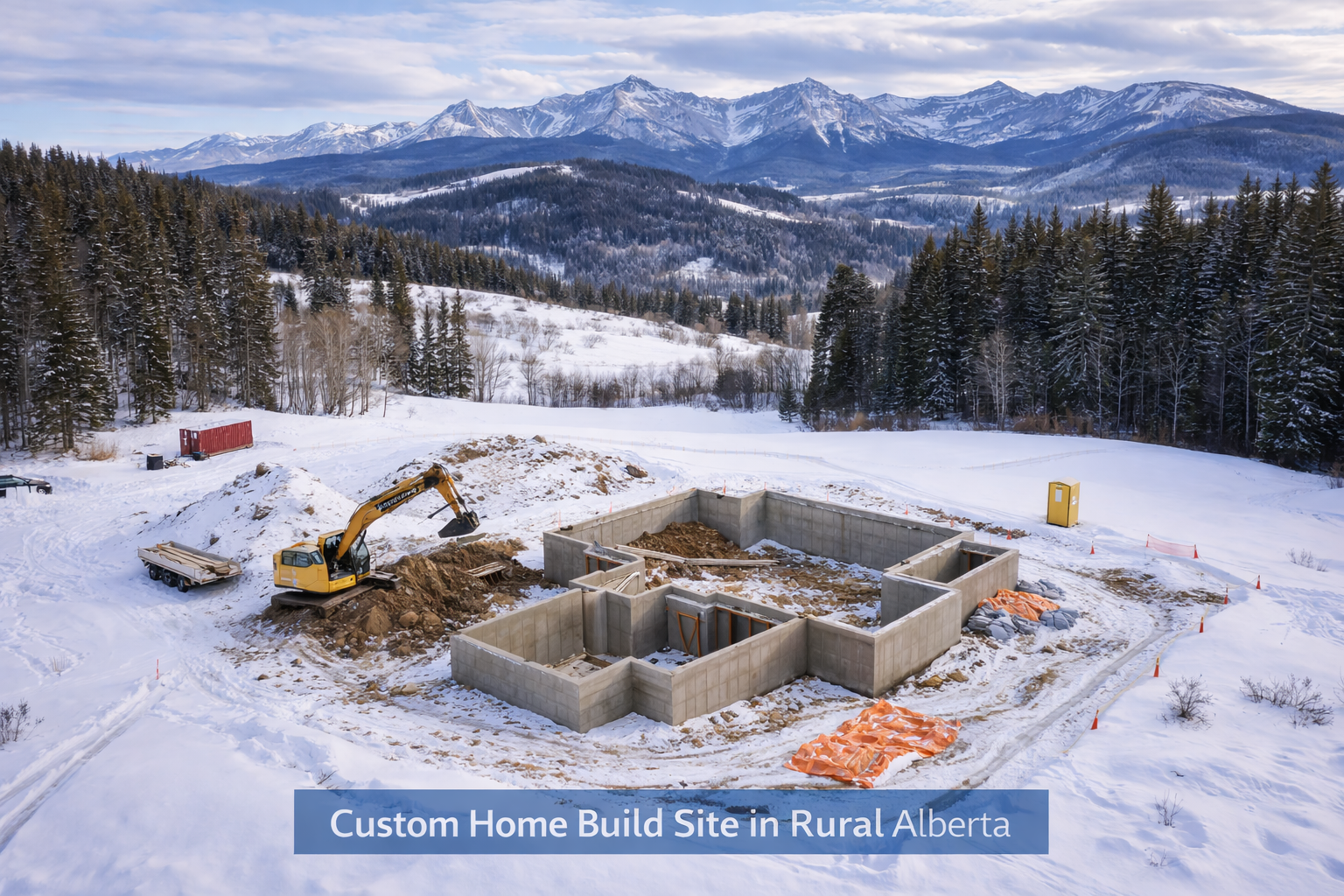
Alberta's residential construction environment has its own set of rules, risks, and regional considerations that don't apply the same way in other provinces. The terrain shifts significantly from the foothills west of Calgary to the flat prairie near Edmonton and Lethbridge. Soil composition, frost depth, and drainage all influence what a competent builder needs to know before breaking ground.
Beyond the physical landscape, Alberta has a regulatory framework specifically designed to protect new home buyers. Understanding that framework before you start meeting with builders gives you a meaningful advantage in evaluating who you're dealing with.
The New Home Buyer Protection Act
Alberta's New Home Buyer Protection Act (NHBPA) requires all new home builders to be licensed and to provide mandatory home warranty coverage on every new home they build. The minimum coverage includes one year on labour and materials, two years on mechanical delivery systems, five years on the building envelope, and ten years on structural components. Builders who cannot demonstrate active registration under this act should not be considered, regardless of how strong their references appear.
You can verify any builder's registration status through the Alberta New Home Warranty Program or through Service Alberta's licensing registry. This check takes five minutes and tells you immediately whether a builder is operating legally.
What Separates a Strong Custom Builder from the Rest
Licensing is the floor, not the ceiling. Once you've confirmed a builder meets basic legal requirements, the real evaluation begins. There are several qualities that consistently separate experienced custom home builders from those who take on custom work without the infrastructure to support it.
Local Trade Relationships
A builder who has worked in Alberta for years has established relationships with local subtrades: framing crews, electricians, plumbers, HVAC technicians, and insulators who understand cold-climate requirements. These relationships mean scheduling priority, familiarity with local codes, and a shorter path to resolution when problems arise on site.
Ask any builder you're considering how long they've worked in your specific region of Alberta, not just the province broadly. A builder primarily based in Calgary may not have the same network in the Foothills or Mountain View County as one who has built there repeatedly.
Design Capability and Build Integration
One of the most overlooked factors is whether a builder has in-house design capability or works closely with a consistent design team. When design and construction are managed separately, change orders become more expensive, timelines extend, and accountability gaps appear between the two parties.
Builders who operate as design build homes Alberta firms eliminate that gap by managing both functions under one roof. For complex custom builds, this integration typically reduces the total number of revisions and keeps budgets tighter from the start.

How to Evaluate Cost Estimates and Contract Structures
Price is the conversation most people want to have first, and it's often the conversation that gets them into trouble. A low initial estimate is not a bargain if the contract allows for unlimited scope expansion or doesn't lock in material pricing.
Fixed-Price vs. Cost-Plus Contracts

The cost to build a custom home in Alberta typically ranges from $275 to $550 per square foot for the construction phase, not including land, permits, or site preparation. High-end or architecturally complex homes can exceed $700 per square foot. Understanding how your builder's estimate breaks down against these benchmarks is a reasonable way to identify quotes that are either dangerously low or significantly above market without explanation.
If you're exploring how the cost to build a custom home Alberta breaks down across different build types and regions, reviewing a detailed cost guide before your first builder meeting can help you ask sharper questions and recognize when a quote doesn't add up.
Step-by-Step: How to Choose a Custom Home Builder in Alberta
- Verify builder registration under the NHBPA. Check Service Alberta or the Alberta New Home Warranty Program's registry before any other step. This eliminates non-compliant builders immediately.
- Define your project scope before requesting quotes. Builders can't give you an accurate number without knowing lot size, square footage, storey count, garage configuration, and finish tier. Vague requests produce vague estimates.
- Request references from homes completed within the last 24 months. Older references don't reflect a builder's current team, trade relationships, or management quality. Ask references specifically about how problems were handled, not just whether they were happy with the result.
- Visit at least one active build site. How a site is managed during construction tells you a lot. Clean sites with organized materials, visible safety signage, and professional subcontractors at work reflect how a builder operates generally.
- Compare contract structures carefully. Review what triggers a change order, how material escalation is handled, and what the dispute resolution process looks like before signing anything.
- Evaluate communication style early. How quickly does the builder respond to your initial inquiry? Are they willing to explain their process, or do they deflect questions? The communication pattern you see before the contract is the one you'll live with through the build.
- Confirm their experience with your land type. Builders who regularly work on rural custom homes Alberta understand the permitting, servicing, and site preparation differences that come with acreage builds outside city limits.
Common Mistakes Buyers Make When Choosing a Builder
- Choosing based on price alone. The lowest quote rarely accounts for all site-specific costs, and low-margin builders tend to cut corners or load change orders to recover margin later.
- Skipping the warranty verification step. Some buyers assume all active builders are properly licensed and warranted. They aren't. Always verify independently.
- Not asking who actually does the work. Some builders act as brokers, subcontracting nearly everything while charging general contractor margins. Understanding who is on site daily matters.
- Ignoring the design phase timeline. Many builders quote a build timeline that starts when permits are approved. The design and permitting phase in Alberta can add three to six months before a shovel goes in the ground.
- Underestimating the value of local expertise. Foothills custom homes Alberta require a different approach to drainage, wind loading, and foundation depth than builds in Edmonton's established suburbs. Local expertise is a material factor, not a marketing phrase.
- Not reviewing the allowance structure in the contract. Allowances for flooring, cabinetry, and fixtures are often set below real market cost. When buyers upgrade, the difference comes out of pocket and can add tens of thousands to the final invoice.
Builder Quality Tiers: What Changes as You Move Up
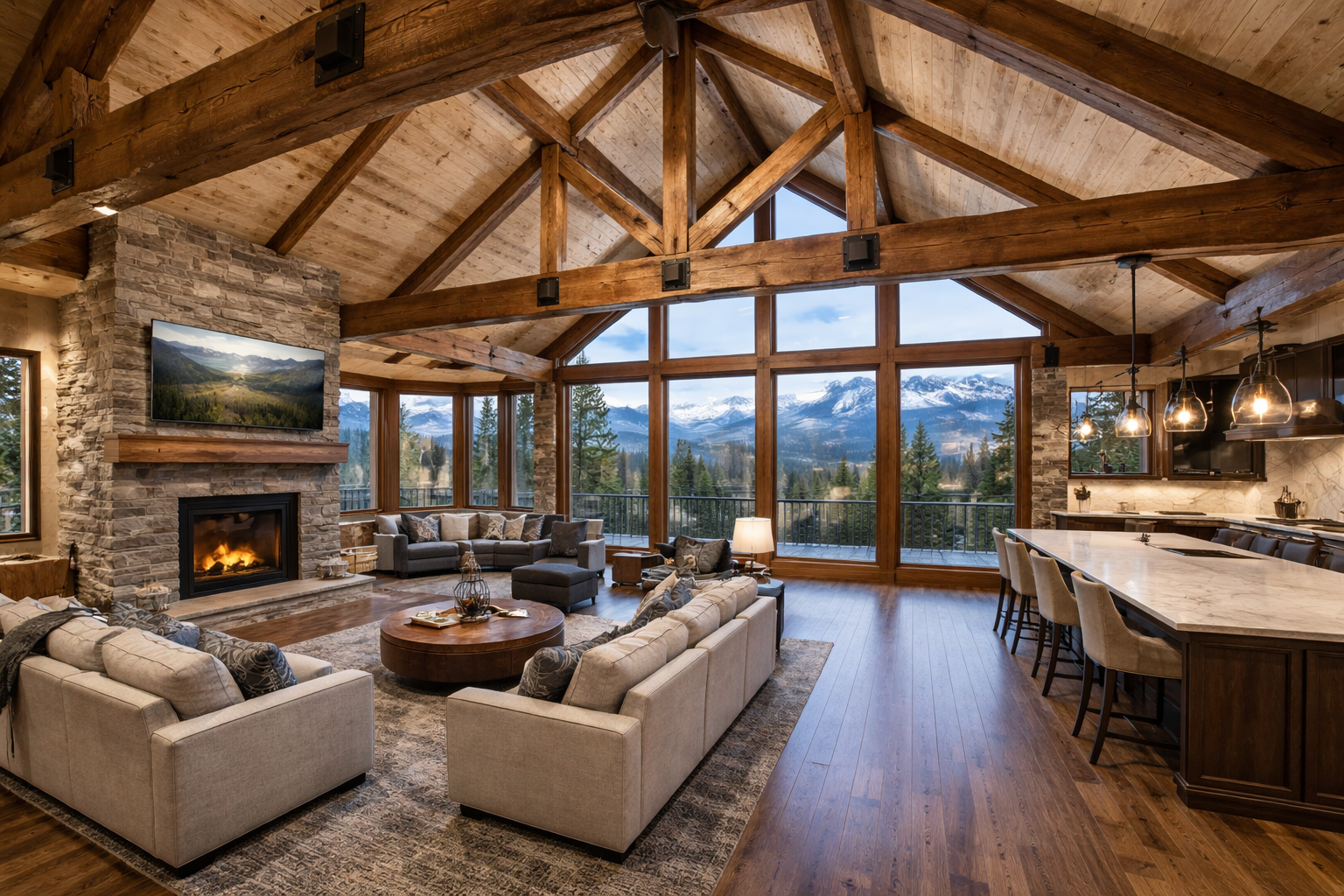
Production builders in Alberta typically complete 50 to 200+ homes per year using standardized plans and prefabricated components. Semi-custom builders offer limited floor plan modifications within established templates. True custom builders design each home from scratch to site-specific conditions and client specifications. The difference in cost between a semi-custom and a fully custom build of comparable square footage can range from 20% to 50% depending on design complexity and finish level.

Working with a high end home builder Alberta means a different experience at every touchpoint. Material selections happen earlier, trade crews tend to be more specialized, and project management is more structured. The cost premium exists, but for complex projects, it typically produces fewer surprises at the end.
Areas Served Across Alberta
Custom home construction demand in Alberta is spread across a diverse range of communities. While Calgary and Edmonton anchor most residential activity, significant custom home building occurs in surrounding municipalities and smaller cities throughout the province.
Common service regions for custom builders in Alberta include: Calgary and surrounding areas such as Okotoks, Cochrane, Airdrie, and Chestermere; Edmonton and surrounding communities including St. Albert, Sherwood Park, Spruce Grove, and Leduc; the Foothills and Mountain View County; Rocky View County; Lacombe, Red Deer, and Central Alberta; and acreage communities throughout the Peace Country and Northern Alberta.
Alberta consistently ranks among the top provinces in Canada for new single-family home starts. In recent years, rural and acreage builds have grown as a proportion of total custom home construction, driven by remote work flexibility and rising urban land costs pushing buyers toward surrounding communities.
Frequently Asked Questions
What is the required warranty in Alberta?
Under the New Home Buyer Protection Act, all new homes built in Alberta must be covered by mandatory home warranty insurance. Coverage minimums are one year for labour and materials defects, two years for mechanical delivery systems (plumbing, heating, electrical distribution), five years for the building envelope, and ten years for structural defects. Builders must arrange and maintain this coverage before a home can be legally sold or occupied.
How do I choose between custom and semi-custom builders?
Semi-custom builders offer pre-designed floor plans that can be modified within defined limits. This works well for buyers who want faster timelines and more predictable pricing. Fully custom builders design from scratch to your specific lot, lifestyle, and aesthetic preferences, which produces a more personalized result but requires more decision-making involvement and a longer pre-construction phase. If you have a specific vision that doesn't fit standard plans, a true custom builder is the appropriate choice.
How are home costs and contracts managed in Alberta?
Most Alberta custom builders use either a fixed-price contract (where a total is agreed before construction begins) or a cost-plus arrangement (where actual costs plus a builder fee are charged as the project progresses). Fixed-price contracts offer more budget certainty but require detailed specifications upfront. Cost-plus contracts provide flexibility but transfer more financial risk to the homeowner. Regardless of contract type, all agreements should clearly define scope, allowances, change order triggers, and dispute processes.
How do I verify a builder's reputation?
Start by confirming their registration with the Alberta New Home Warranty Program and checking for any complaints through Service Alberta's consumer resources. Then request references from clients with completed homes in the last two years and speak to those clients directly. Visiting a completed project in person, or an active build site, provides more reliable information than any online review. Industry memberships such as the Canadian Home Builders' Association (CHBA) are a secondary indicator of professional engagement.
How long does the construction process take in Alberta?
From initial design meeting to move-in, a custom home in Alberta typically takes 14 to 24 months in total. The design and permitting phase can require three to six months before construction begins. Active construction then runs between 10 and 18 months depending on project size, municipality processing times, winter conditions, and trade availability. Buyers who plan for the longer end of this range are better positioned to avoid schedule-driven decisions that affect quality.
Ready to Build? Here's What to Do Next
The best time to start evaluating builders is before you've finalized your land purchase. Understanding what a builder needs from your site, your budget, and your timeline gives you better information to make all three decisions well together.
Mountains Edge builds custom homes across Alberta with a focus on thoughtful design, transparent process, and builds that hold up to this province's demands. Whether you're planning an acreage build in the Foothills or a high-end home in a new community, the team brings the local knowledge and trade relationships your project requires.
To start a conversation about your build, call Mountains Edge at (587) 742-6166. No pressure, no sales scripts. Just a straightforward discussion about what you're planning and whether it's a good fit.